INSTALLATION DEVICES – RCCBs
Index
Click on the name to go directly to the product
–Ex9L-H – Ex9L-H F type –Ex9L-N, 6 kA –Ex9CL-100, 10 kA –Ex9LB63 B type –RCBOs Ex9BL-H, 10kA
–RCBOs Ex9BL-N, 6kA –RCBOs Ex9BL20J, 6kA –RCBOs Ex9NL-N 3P+N, 6 kA –RCBOs Ex9NLE, 6 kA
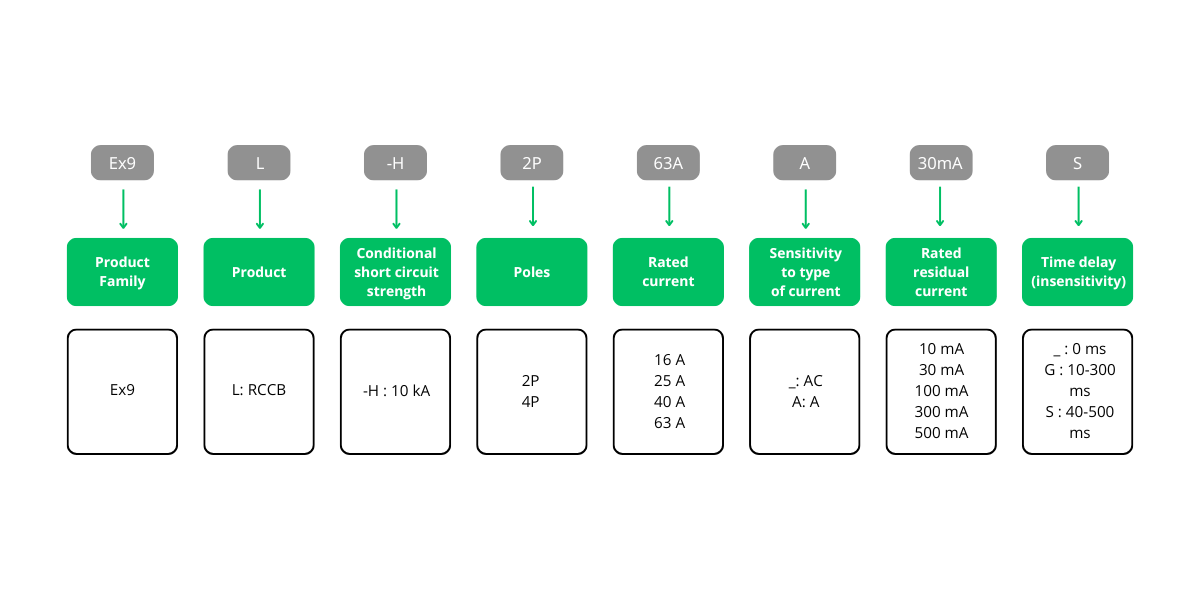
RCCBs Ex9L-H, 10 kA
-
Residual Current Circuit Breakers (RCCB) according to EN 61008-1
-
Rated conditional short-circuit current $I_{nc}$ 10 kA
-
2 and 4-pole versions
-
Rated residual current 10, 30, 100, 300 and 500 mA
-
Rated current up to 63 A
-
Rated operational voltage 230/400 V AC
-
Types AC, A, S and G
-
Electrical tripping indication
-
Suitable for applications from -25 to +40 °C
Ex9L-H residual current circuit breakers are suitable for both domestic and industrial applications. They are based on the magnetic principle, which provides the advantage of voltage-independent operation. Appropriate voltage is only required for testing the RCCB using the test button. Magnetic RCCBs must be tested regularly; local laws or regulations may apply. It is recommended to perform the test every 6 months in normal environments and every month in harsh conditions.
RCCBs Ex9L-H, 10 kA
-
Residual Current Circuit Breakers (RCCB) according to EN 61008-1
-
Rated conditional short-circuit current $I_{nc}$ 10 kA
-
2 and 4-pole versions
-
Rated residual current 10, 30, 100, 300 and 500 mA
-
Rated current up to 63 A
-
Rated operational voltage 230/400 V AC
-
Types AC, A, S and G
-
Electrical tripping indication
-
Suitable for applications from -25 to +40 °C
Ex9L-H residual current circuit breakers are suitable for both domestic and industrial applications. They are based on the magnetic principle, which provides the advantage of voltage-independent operation. Appropriate voltage is only required for testing the RCCB using the test button. Magnetic RCCBs must be tested regularly; local laws or regulations may apply. It is recommended to perform the test every 6 months in normal environments and every month in harsh conditions.
Certifications


Click to open
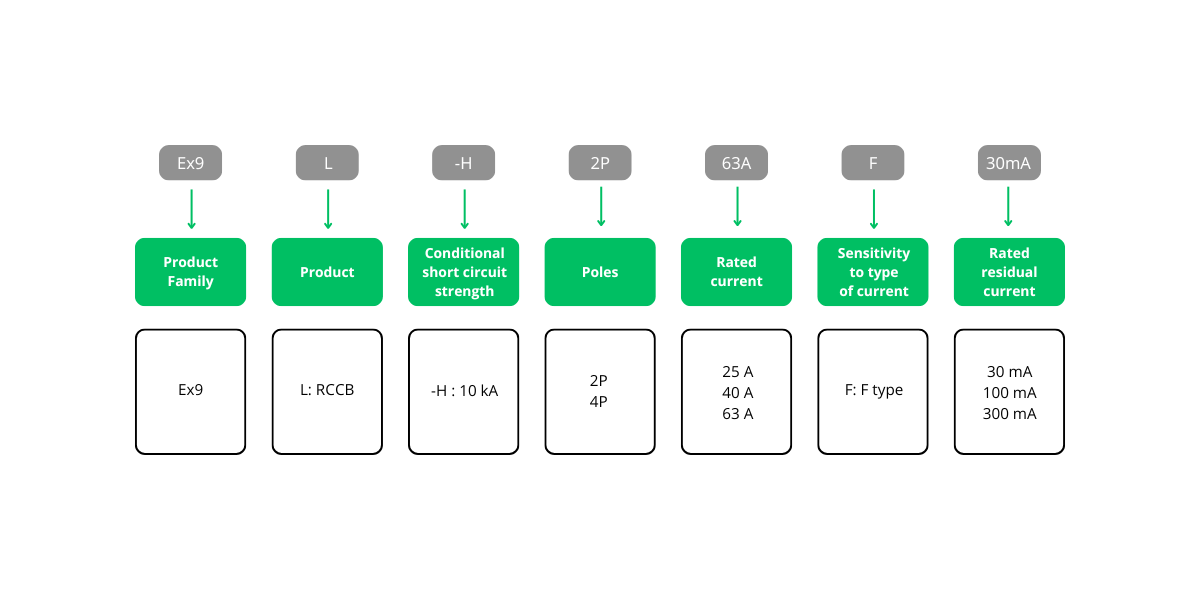
RCCBs Ex9L-H F type, 10 kA
-
-
Residual Current Circuit Breakers according to EN 61008-1 and EN 62423
-
Rated conditional short-circuit current $I_{nc}$ 10 kA
-
2 and 4-pole versions
-
Rated residual current 30, 100 and 300 mA
-
Rated current up to 63 A
-
Rated operational voltage 240/415 V AC
-
Type F
-
Electrical tripping indication
-
Suitable for applications from -25 to +40 °C
Ex9L-H Type F residual current circuit breakers are suitable for both domestic and industrial applications. They are based on the magnetic principle, which provides the advantage of voltage-independent operation. Type F provides sensitivity to alternating current and residual pulsating direct current, as well as the detection of high-frequency currents up to 1 kHz. Appropriate voltage is only required for testing the RCCB using the test button. Magnetic RCCBs must be tested regularly; local laws or regulations may apply for this testing period. It is recommended to perform the test every 6 months in normal environments and every month in harsh conditions.
-
Certifications
RCCBs Ex9L-H F type, 10 kA
-
-
Residual Current Circuit Breakers according to EN 61008-1 and EN 62423
-
Rated conditional short-circuit current $I_{nc}$ 10 kA
-
2 and 4-pole versions
-
Rated residual current 30, 100 and 300 mA
-
Rated current up to 63 A
-
Rated operational voltage 240/415 V AC
-
Type F
-
Electrical tripping indication
-
Suitable for applications from -25 to +40 °C
Ex9L-H Type F residual current circuit breakers are suitable for both domestic and industrial applications. They are based on the magnetic principle, which provides the advantage of voltage-independent operation. Type F provides sensitivity to alternating current and residual pulsating direct current, as well as the detection of high-frequency currents up to 1 kHz. Appropriate voltage is only required for testing the RCCB using the test button. Magnetic RCCBs must be tested regularly; local laws or regulations may apply for this testing period. It is recommended to perform the test every 6 months in normal environments and every month in harsh conditions.
-
Click to open
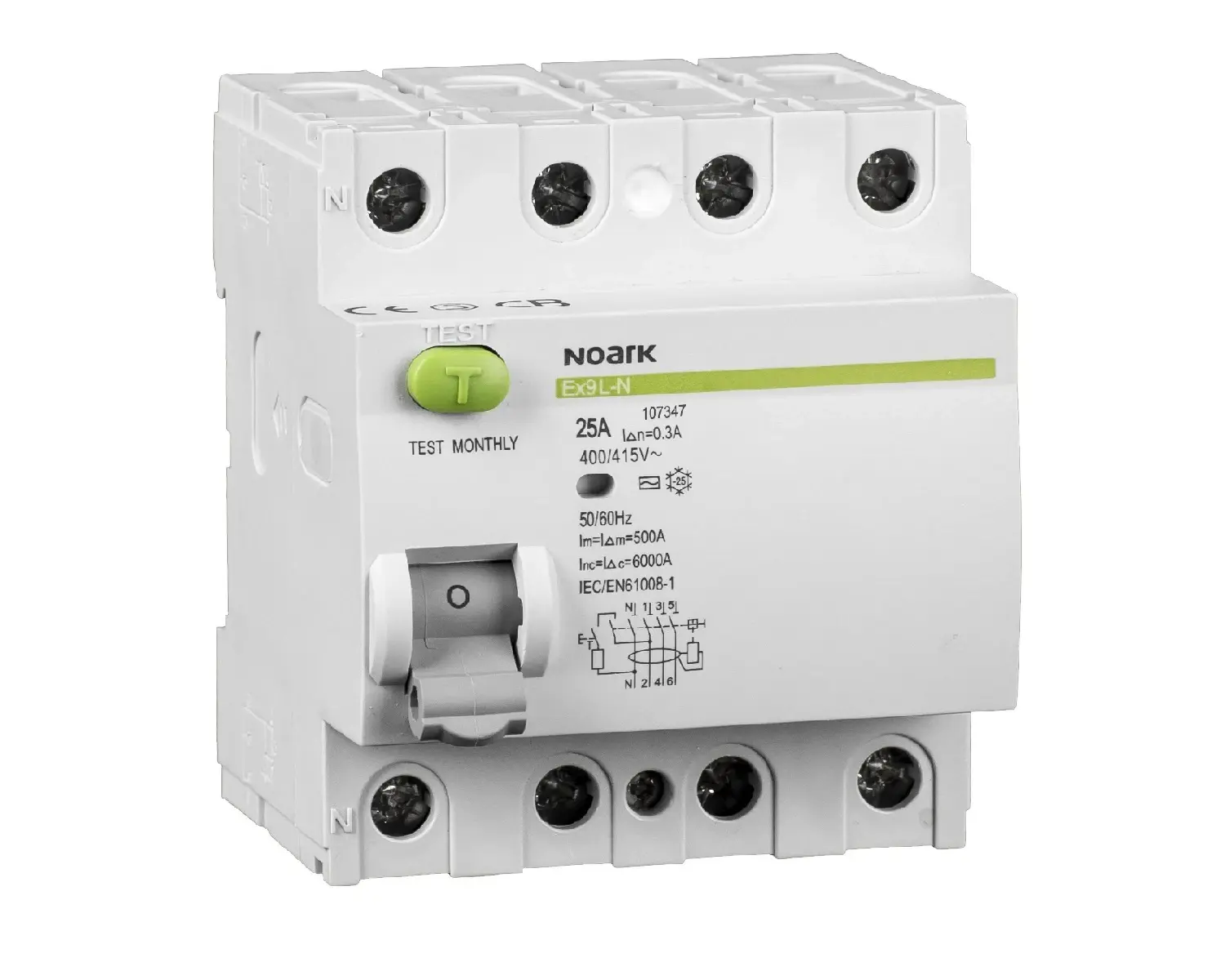
RCCBs Ex9L-N, 6 kA
-
-
Residual Current Circuit Breakers (RCCB) according to EN 61008-1
-
Rated conditional short-circuit current $I_{nc}$ 6 kA
-
2 and 4-pole versions
-
Rated residual current 10, 30, 100, 300 and 500 mA
-
Rated current up to 63 A
-
Rated operational voltage 230/400 V AC
-
Types AC, A, S and G
-
Electrical tripping indication
-
Suitable for applications from -25 to +40 °C
Ex9L-N residual current circuit breakers are mainly suitable for household applications. They are based on the magnetic principle, which provides the advantage of voltage-independent operation. Appropriate voltage is only required for testing the RCCB using the T test button. Magnetic RCCBs must be tested regularly; local laws or regulations may apply. It is recommended to perform the test every 6 months in normal environments and every month in harsh conditions. The 6 kA variant of the Ex9L-N residual current circuit breaker is primarily intended for applications with lower requirements, such as basic protection in domestic installations.
-
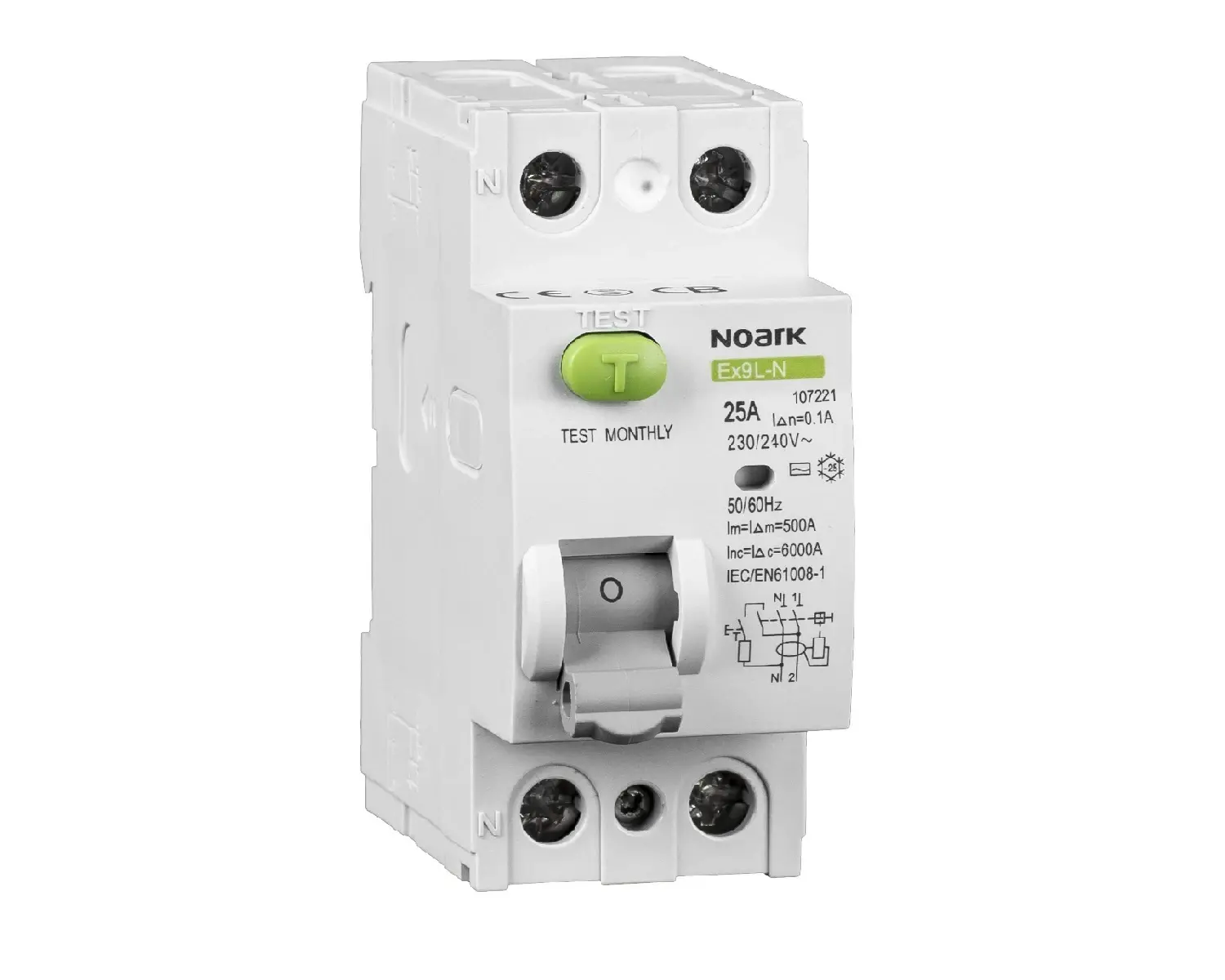
RCCBs Ex9L-N, 6 kA
-
-
Residual Current Circuit Breakers (RCCB) according to EN 61008-1
-
Rated conditional short-circuit current $I_{nc}$ 6 kA
-
2 and 4-pole versions
-
Rated residual current 10, 30, 100, 300 and 500 mA
-
Rated current up to 63 A
-
Rated operational voltage 230/400 V AC
-
Types AC, A, S and G
-
Electrical tripping indication
-
Suitable for applications from -25 to +40 °C
Ex9L-N residual current circuit breakers are mainly suitable for household applications. They are based on the magnetic principle, which provides the advantage of voltage-independent operation. Appropriate voltage is only required for testing the RCCB using the T test button. Magnetic RCCBs must be tested regularly; local laws or regulations may apply. It is recommended to perform the test every 6 months in normal environments and every month in harsh conditions. The 6 kA variant of the Ex9L-N residual current circuit breaker is primarily intended for applications with lower requirements, such as basic protection in domestic installations.
-
Certifications
Click to open
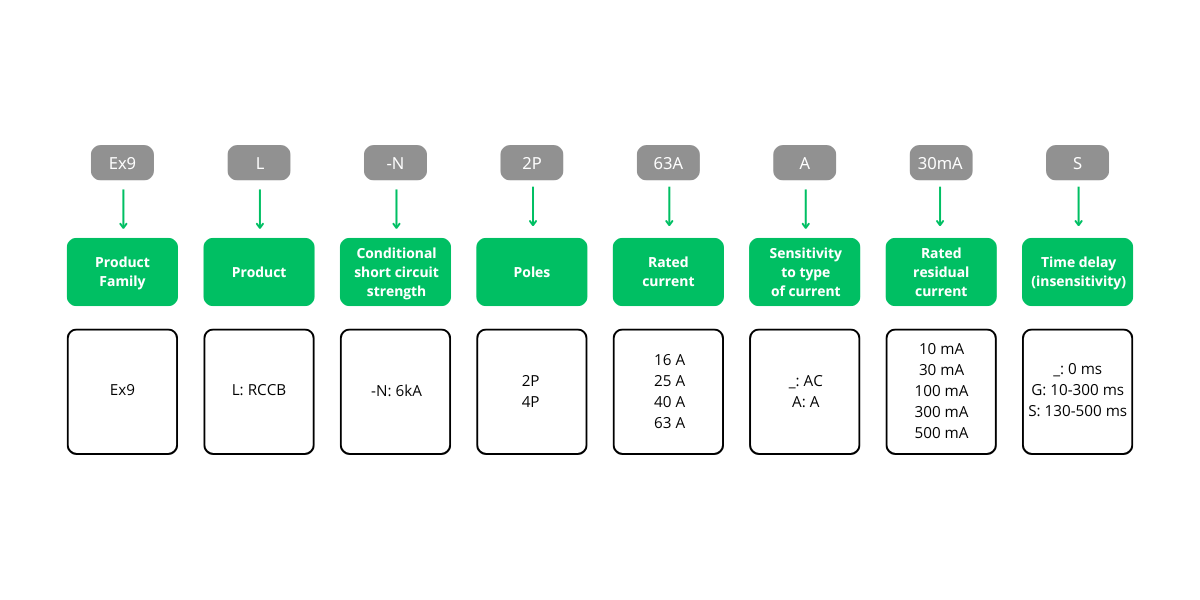
RCCBs Ex9CL-100, 10 kA
- Residual Current Circuit Breakers (RCCB) according to IEC / EN 61008-1
-
-
Rated conditional short-circuit current $I_{nc}$ 10 kA
-
2 and 4-pole versions
-
Rated residual current 100, 300 mA
-
Rated current up to 100 A
-
Rated operational voltage 230/400 V AC
-
Types S and S+A
-
Electrical tripping indication
-
Ex9CL-100 residual current circuit breakers are suitable for both domestic and industrial applications. They are based on the magnetic principle, which provides the advantage of voltage-independent operation. Appropriate voltage is only required for testing the RCCB using the T test button. Magnetic RCCBs must be tested regularly; local laws or regulations may apply. It is recommended to perform the test every 6 months in normal environments and every month in harsh conditions.
RCCBs Ex9CL-100, 10 kA
- Residual Current Circuit Breakers (RCCB) according to IEC / EN 61008-1
-
-
Rated conditional short-circuit current $I_{nc}$ 10 kA
-
2 and 4-pole versions
-
Rated residual current 100, 300 mA
-
Rated current up to 100 A
-
Rated operational voltage 230/400 V AC
-
Types S and S+A
-
Electrical tripping indication
-
Ex9CL-100 residual current circuit breakers are suitable for both domestic and industrial applications. They are based on the magnetic principle, which provides the advantage of voltage-independent operation. Appropriate voltage is only required for testing the RCCB using the T test button. Magnetic RCCBs must be tested regularly; local laws or regulations may apply. It is recommended to perform the test every 6 months in normal environments and every month in harsh conditions.
Certifications

Click to open
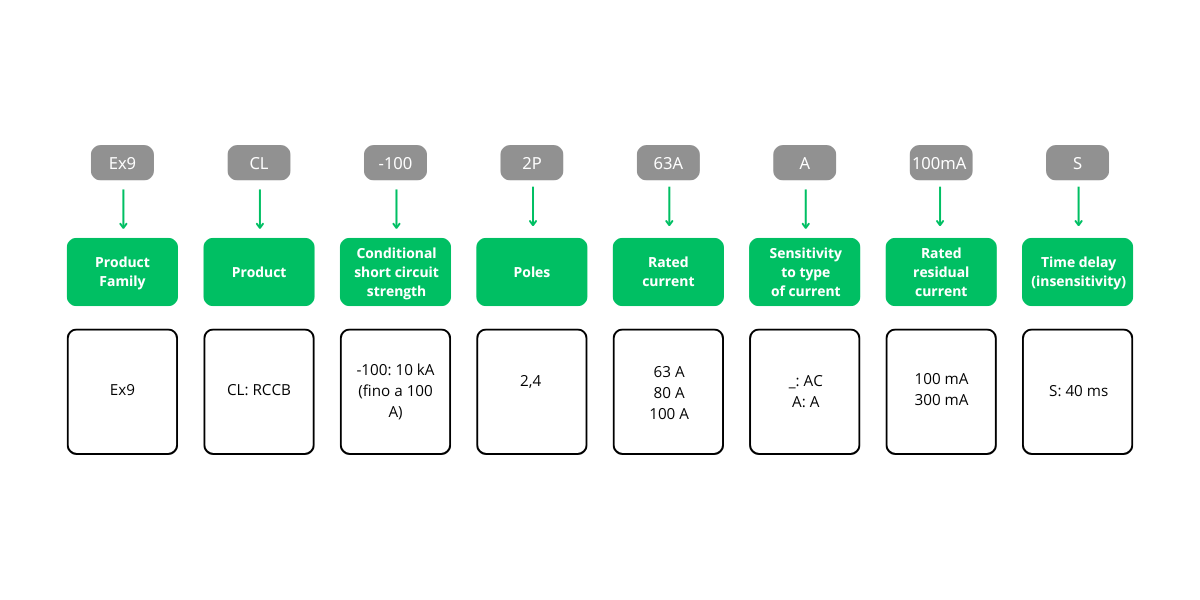
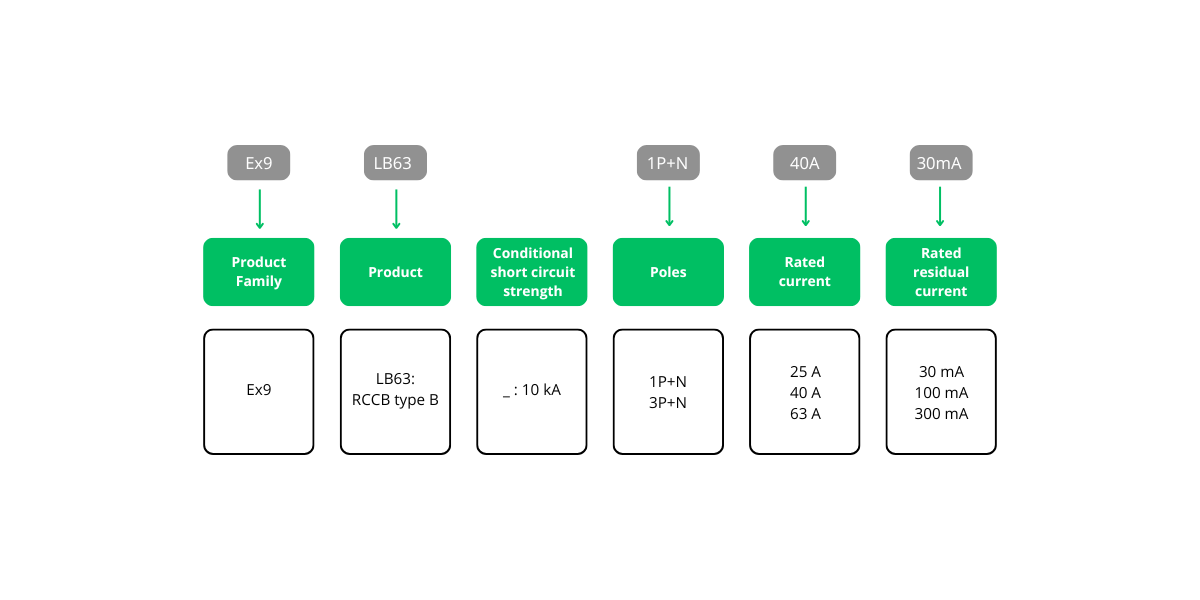
RCBs Ex9LB63 B type
-
Residual Current Circuit Breakers (RCCB) according to IEC/EN 61008-1 and IEC/EN 62423
-
Rated conditional short-circuit current $I_{nc}$ 10 kA
-
Type B
-
2 and 4-pole versions
-
Rated residual current 30, 100 and 300 mA
-
Rated current up to 63 A
-
Rated operational voltage 230/400 V AC
-
Electrical tripping indication
-
Suitable for applications from -25 to +40 °C
Ex9LB63 Type B residual current circuit breakers are suitable for both domestic and industrial applications, particularly where frequency inverters, photovoltaic systems, EV chargers, and similar devices are used. Type B provides sensitivity to residual alternating current (AC), pulsating direct current, and smooth direct current (DC), as well as high frequencies up to $1~\text{kHz}$. They are based on electronic technology, which offers the advantage of more precise residual current measurement and, consequently, a reduction in nuisance tripping. Furthermore, these devices are not affected by the magnetization of the tripping unit. Residual current circuit breakers must be tested regularly; testing intervals may be subject to local laws or regulations. It is recommended to perform the test every 6 months in normal environments and every month in harsh conditions.
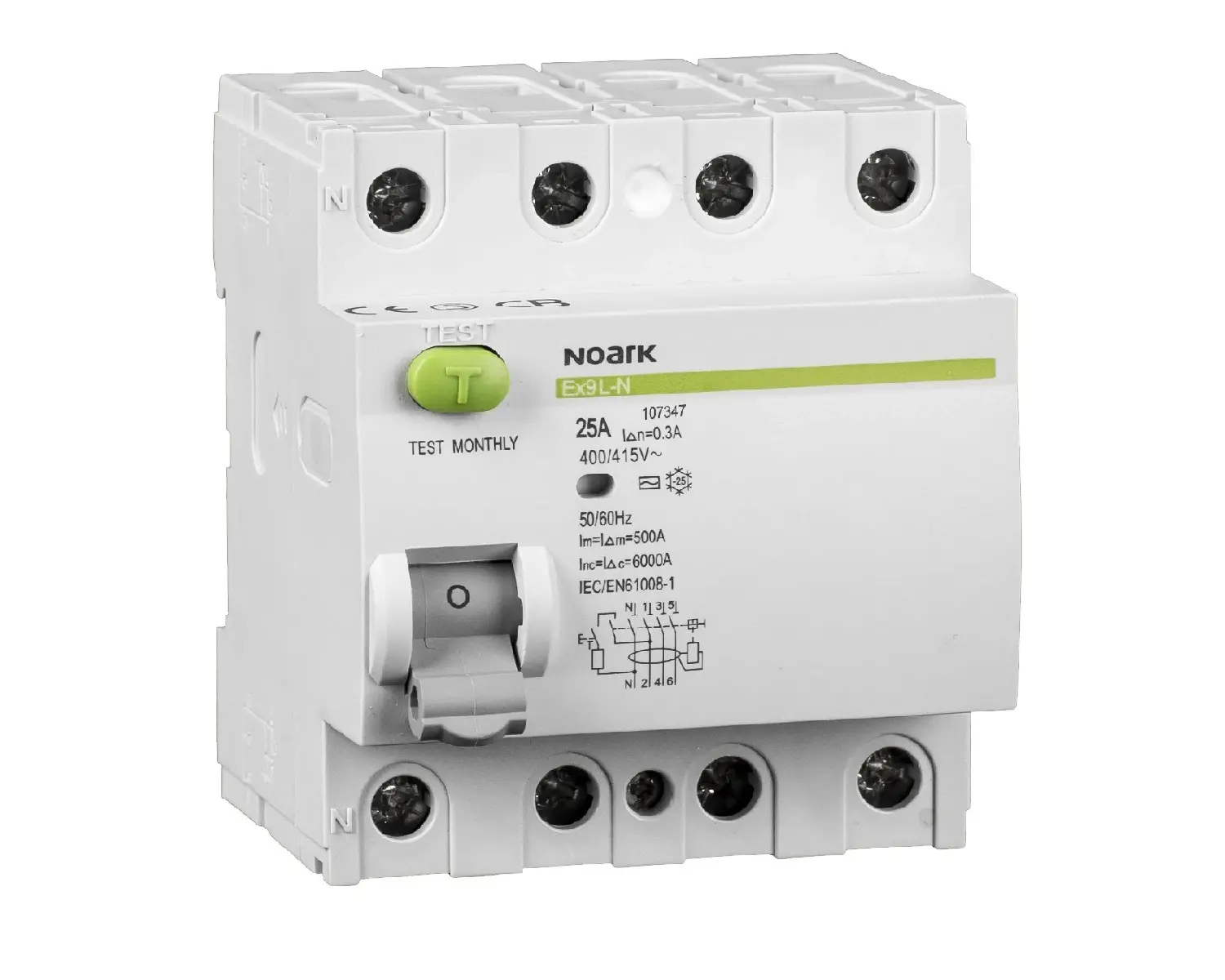
Certifications
RCBs Ex9LB63 B type
-
Residual Current Circuit Breakers (RCCB) according to IEC/EN 61008-1 and IEC/EN 62423
-
Rated conditional short-circuit current $I_{nc}$ 10 kA
-
Type B
-
2 and 4-pole versions
-
Rated residual current 30, 100 and 300 mA
-
Rated current up to 63 A
-
Rated operational voltage 230/400 V AC
-
Electrical tripping indication
-
Suitable for applications from -25 to +40 °C
Ex9LB63 Type B residual current circuit breakers are suitable for both domestic and industrial applications, particularly where frequency inverters, photovoltaic systems, EV chargers, and similar devices are used. Type B provides sensitivity to residual alternating current (AC), pulsating direct current, and smooth direct current (DC), as well as high frequencies up to $1~\text{kHz}$. They are based on electronic technology, which offers the advantage of more precise residual current measurement and, consequently, a reduction in nuisance tripping. Furthermore, these devices are not affected by the magnetization of the tripping unit. Residual current circuit breakers must be tested regularly; testing intervals may be subject to local laws or regulations. It is recommended to perform the test every 6 months in normal environments and every month in harsh conditions.
Click to open
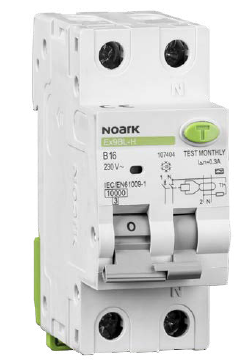
RCBOs Ex9BL-H, 10kA
-
Residual Current Breakers with Overcurrent protection (RCBO) according to EN 61009
-
Rated breaking capacity $I_{cn}$ 10 kA
-
1+N pole version
-
Rated residual current 30, 100, 300 mA
-
Rated current up to 40 A
-
Tripping characteristics B and C of the built-in circuit breaker
-
Type AC and A RCBOs
-
Width of 2 modules
-
Suitable for applications from -25 to +40 °C
Ex9BL residual current breakers are suitable for both domestic and industrial applications. They are based on the combination of a residual current device with a magnetic principle and a circuit breaker with a thermal release for overload and a magnetic release for short-circuit. This provides the residual current device with the advantage of voltage-independent operation. Appropriate voltage is only required when testing the RCBO using the T test button. Magnetic RCBOs must be tested regularly; testing intervals may be subject to local laws or regulations. It is recommended to perform the test every 6 months in normal environments and every month in harsh conditions.
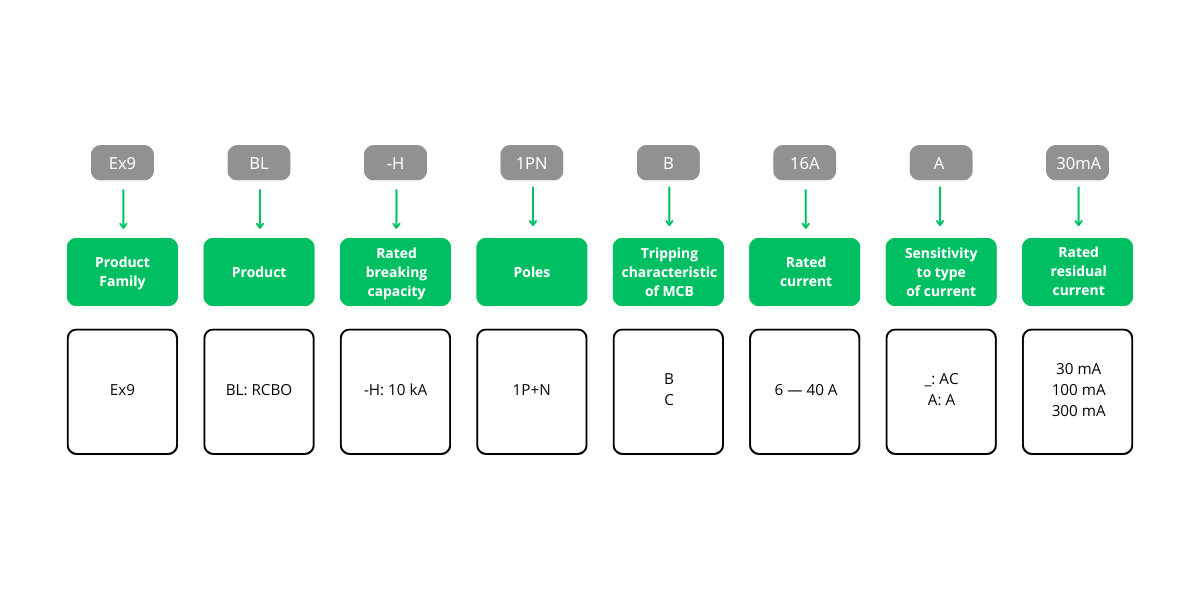
RCBOs Ex9BL-H, 10kA
-
Residual Current Breakers with Overcurrent protection (RCBO) according to EN 61009
-
Rated breaking capacity $I_{cn}$ 10 kA
-
1+N pole version
-
Rated residual current 30, 100, 300 mA
-
Rated current up to 40 A
-
Tripping characteristics B and C of the built-in circuit breaker
-
Type AC and A RCBOs
-
Width of 2 modules
-
Suitable for applications from -25 to +40 °C
Ex9BL residual current breakers are suitable for both domestic and industrial applications. They are based on the combination of a residual current device with a magnetic principle and a circuit breaker with a thermal release for overload and a magnetic release for short-circuit. This provides the residual current device with the advantage of voltage-independent operation. Appropriate voltage is only required when testing the RCBO using the T test button. Magnetic RCBOs must be tested regularly; testing intervals may be subject to local laws or regulations. It is recommended to perform the test every 6 months in normal environments and every month in harsh conditions.
Certifications
Click to open
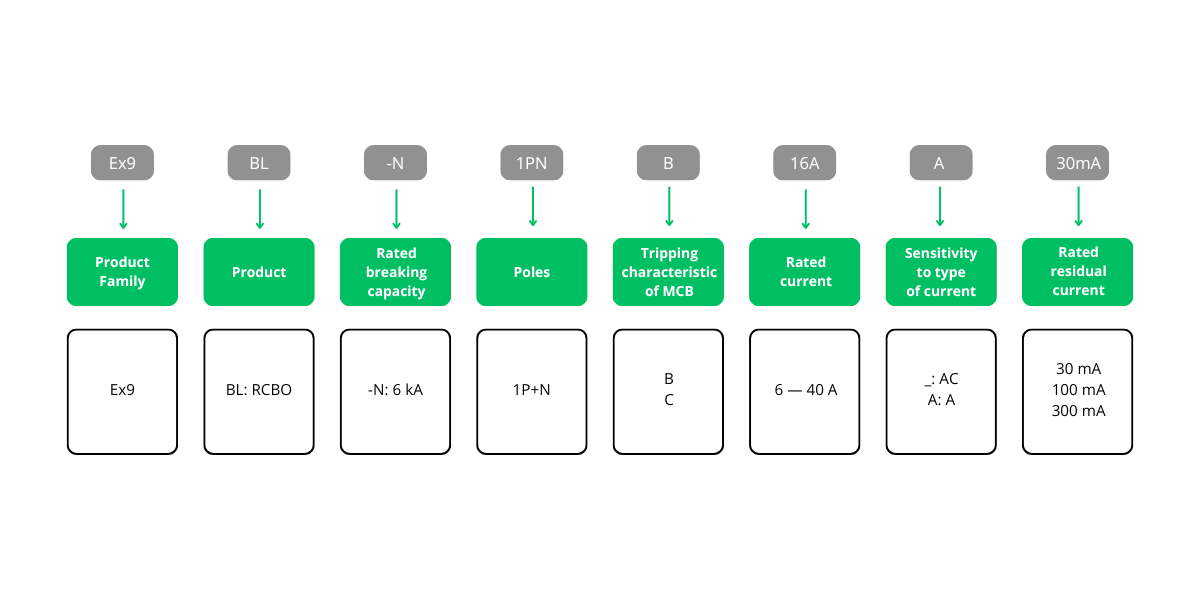
RCBOs Ex9BL-N, 6kA
-
Residual Current Breakers with Overcurrent protection (RCBO) according to EN 61009
-
Rated breaking capacity $I_{cn}$ 6 kA
-
1+N pole version
-
Rated residual current 30, 100, 300 mA
-
Rated current up to 40 A
-
Tripping characteristics B and C of the built-in circuit breaker
-
Type AC and A RCBOs
-
Width of 2 modules
-
Suitable for applications from -25 to +40 °C
Ex9BL residual current breakers are suitable for both domestic and industrial applications. They are based on the combination of a residual current device with a magnetic principle and a circuit breaker equipped with a thermal release for overload protection and a magnetic release for short-circuit protection. This provides the residual current device with the advantage of voltage-independent operation. Appropriate voltage is only required when testing the RCBO using the T test button. Magnetic RCBOs must be tested regularly; testing intervals may be subject to local laws or regulations. It is recommended to perform the test every 6 months in normal environments and every month in harsh conditions.
RCBOs Ex9BL-N, 6kA
-
Residual Current Breakers with Overcurrent protection (RCBO) according to EN 61009
-
Rated breaking capacity $I_{cn}$ 6 kA
-
1+N pole version
-
Rated residual current 30, 100, 300 mA
-
Rated current up to 40 A
-
Tripping characteristics B and C of the built-in circuit breaker
-
Type AC and A RCBOs
-
Width of 2 modules
-
Suitable for applications from -25 to +40 °C
Ex9BL residual current breakers are suitable for both domestic and industrial applications. They are based on the combination of a residual current device with a magnetic principle and a circuit breaker equipped with a thermal release for overload protection and a magnetic release for short-circuit protection. This provides the residual current device with the advantage of voltage-independent operation. Appropriate voltage is only required when testing the RCBO using the T test button. Magnetic RCBOs must be tested regularly; testing intervals may be subject to local laws or regulations. It is recommended to perform the test every 6 months in normal environments and every month in harsh conditions.
Certifications
Click to open
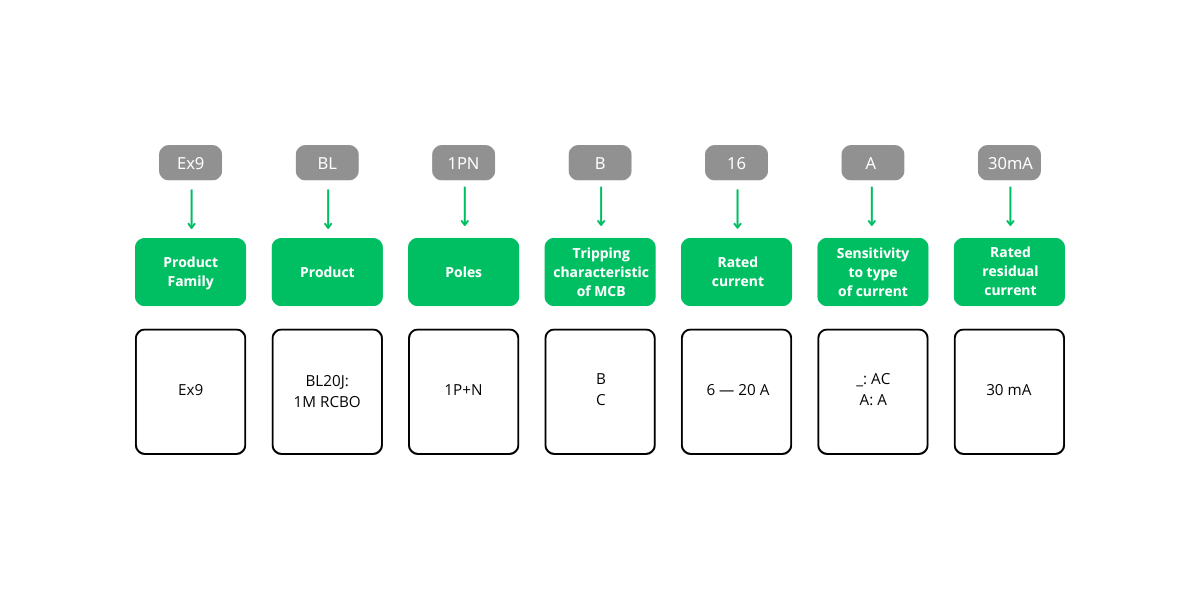
RCBOs Ex9BL20J, 6kA
-
Module Residual Current Breakers with Overcurrent protection (RCBO), voltage-independent, according to EN 61009
-
Rated breaking capacity ($I_{cn}$) 6 kA
-
1+N pole version
-
Rated residual current 30 mA
-
Rated currents up to 20 A
-
Tripping characteristics B and C of the built-in circuit breaker
-
RCBO types: AC and A
-
Width of 1 module
-
Suitable for applications from −35 to +70 °C
- Gli Interruttori Differenziali con protezione da Sovraccarico (RCBO) modello Ex9BL20J sono adatti per applicazioni in ambito residenziale. Con una larghezza di solo un modulo (18 mm), offrono una soluzione salvaspazio rispetto ai RCBO standard a due moduli. Sono basati sulla combinazione di: Un dispositivo di corrente residua (differenziale) con principio magnetico.
Ex9BL20J RCBOs are suitable for residential applications. With a width of only one module (18 mm), they offer a space-saving solution compared to standard two-module RCBOs. They are based on the combination of:
-
A residual current device with a magnetic principle.
-
A circuit breaker with a thermal release for overload and a magnetic release for short-circuit.
The voltage-independent function ensures reliable operation, requiring adequate voltage only when testing the RCBO via the test button (T). Magnetic RCBOs must be tested regularly; local laws or regulations may apply. It is recommended to perform the test every 6 months in normal environmental conditions and every month in harsh conditions.
RCBOs Ex9BL20J, 6kA
-
Module Residual Current Breakers with Overcurrent protection (RCBO), voltage-independent, according to EN 61009
-
Rated breaking capacity ($I_{cn}$) 6 kA
-
1+N pole version
-
Rated residual current 30 mA
-
Rated currents up to 20 A
-
Tripping characteristics B and C of the built-in circuit breaker
-
RCBO types: AC and A
-
Width of 1 module
-
Suitable for applications from −35 to +70 °C
- Gli Interruttori Differenziali con protezione da Sovraccarico (RCBO) modello Ex9BL20J sono adatti per applicazioni in ambito residenziale. Con una larghezza di solo un modulo (18 mm), offrono una soluzione salvaspazio rispetto ai RCBO standard a due moduli. Sono basati sulla combinazione di: Un dispositivo di corrente residua (differenziale) con principio magnetico.
Ex9BL20J RCBOs are suitable for residential applications. With a width of only one module (18 mm), they offer a space-saving solution compared to standard two-module RCBOs. They are based on the combination of:
-
A residual current device with a magnetic principle.
-
A circuit breaker with a thermal release for overload and a magnetic release for short-circuit.
The voltage-independent function ensures reliable operation, requiring adequate voltage only when testing the RCBO via the test button (T). Magnetic RCBOs must be tested regularly; local laws or regulations may apply. It is recommended to perform the test every 6 months in normal environmental conditions and every month in harsh conditions.
Certifications
Click to open
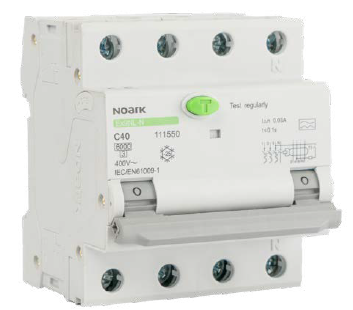
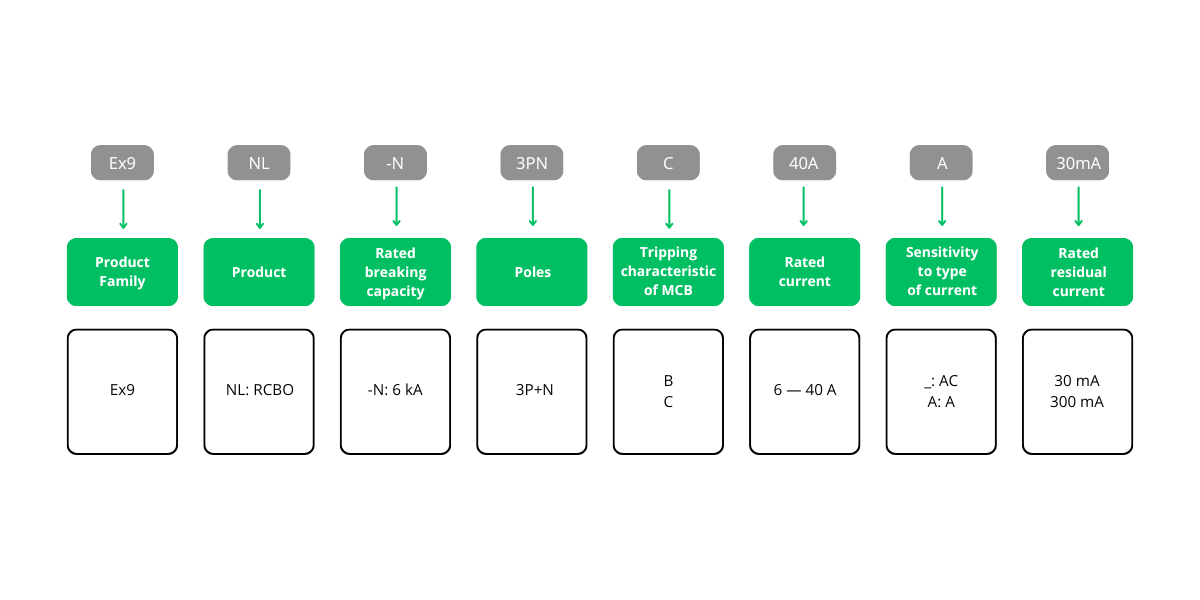
RCBOs Ex9NL-N 3P+N, 6 kA
- Interruttori Magnetotermici Differenziali (RCBO) con protezione da sovraccarico secondo la IEC / EN 61009-1
- Potere di interruzione nominale Icn 6 kA
- Versione a 3+N poli
- Corrente differenziale nominale 30, 300 mA
- Corrente nominale fino a 40 A
- Caratteristiche di intervento B e C dell’interruttore automatico installato
- RCBO di tipo AC e A
- Larghezza 4 moduli
- Adatto per applicazioni da -25 a +40 °C
Gli interruttori magnetotermici differenziali (RCBO) Ex9NL sono adatti sia per applicazioni domestiche che industriali. Si basano sulla combinazione di un dispositivo differenziale con principio magnetico e di un interruttore automatico con sgancio termico per il sovraccarico e sgancio magnetico per la corrente di cortocircuito. Ciò comporta il vantaggio del funzionamento indipendente dalla tensione del dispositivo differenziale. Una tensione adeguata è necessaria solo quando si testa l’RCBO con il pulsante di prova T.
Gli RCBO magnetici dovrebbero essere testati regolarmente, potrebbero essere applicate leggi o regolamenti locali. Si raccomanda di eseguire il test ogni 6 mesi in ambienti normali e ogni mese in condizioni gravose.
RCBOs Ex9NL-N 3P+N, 6 kA
- Interruttori Magnetotermici Differenziali (RCBO) con protezione da sovraccarico secondo la IEC / EN 61009-1
- Potere di interruzione nominale Icn 6 kA
- Versione a 3+N poli
- Corrente differenziale nominale 30, 300 mA
- Corrente nominale fino a 40 A
- Caratteristiche di intervento B e C dell’interruttore automatico installato
- RCBO di tipo AC e A
- Larghezza 4 moduli
- Adatto per applicazioni da -25 a +40 °C
Gli interruttori magnetotermici differenziali (RCBO) Ex9NL sono adatti sia per applicazioni domestiche che industriali. Si basano sulla combinazione di un dispositivo differenziale con principio magnetico e di un interruttore automatico con sgancio termico per il sovraccarico e sgancio magnetico per la corrente di cortocircuito. Ciò comporta il vantaggio del funzionamento indipendente dalla tensione del dispositivo differenziale. Una tensione adeguata è necessaria solo quando si testa l’RCBO con il pulsante di prova T.
Gli RCBO magnetici dovrebbero essere testati regolarmente, potrebbero essere applicate leggi o regolamenti locali. Si raccomanda di eseguire il test ogni 6 mesi in ambienti normali e ogni mese in condizioni gravose.
Certificazioni
Click to open
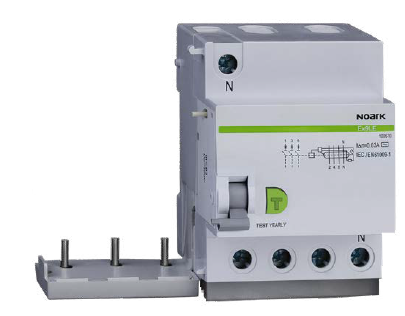
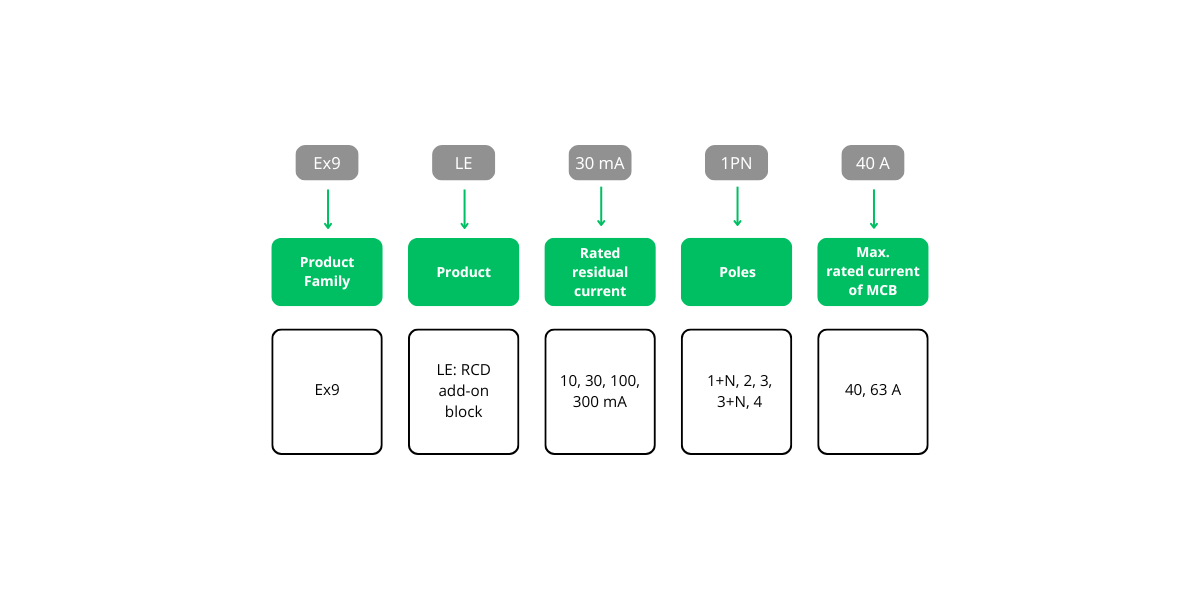
RCD add-on blocks Ex9LE
- Blocchi differenziali aggiuntivi
- Testati secondo IEC / EN 61009
- Per combinazione con MCB Ex9B
- Potere nominale di cortocircuito condizionato Inc 10 kA in combinazione con Ex9BH e 6 kA e con Ex9BN
- Versioni da 1+N fino a 4 poli
- Corrente differenziale nominale 10, 30, 100, 300 mA
- Corrente nominale fino a 63 A
- Tensione operativa nominale 230/400 V CA
- RCD di tipo AC
I blocchi differenziali aggiuntivi Ex9LE sono adatti sia per applicazioni domestiche che industriali. Si basano su tecnologIa elettronica, che offre il vantaggio di una misurazione più precisa della corrente differenziale e, di conseguenza, una riduzione degli interventi indesiderati. (Per l’utilizzo di questo dispositivo, devono essere soddisfatti i requisiti e le condizioni previste dalla normativa locale.) Questi dispositivi non risentono della magnetizzazione dell’unità di sgancio, pertanto non è necessario effettuare test periodici per mantenere la funzionalità. Tuttavia, per rispettare i test obbligatori previsti dalla norma di prodotto, si raccomanda di verificarne il funzionamento una volta all’anno.
La versione a determinato numero di poli del blocco differenziale aggiuntivo deve essere combinata con gli interruttori automatici della linea Ex9B nel modo seguente: la versione 1+N poli del blocco differenziale può essere combinata con un interruttore 1 polo, la versione 2 poli con interruttori 1+N o 2 poli, la versione 3 poli o 3+N poli con interruttori 3 poli, la versione 4 poli con interruttori 3+N o 4 poli. Queste varianti consentono di realizzare diverse combinazioni per ottenere dispositivi con funzionalità RCBO.
RCD add-on blocks Ex9LE
- Blocchi differenziali aggiuntivi
- Testati secondo IEC / EN 61009
- Per combinazione con MCB Ex9B
- Potere nominale di cortocircuito condizionato Inc 10 kA in combinazione con Ex9BH e 6 kA e con Ex9BN
- Versioni da 1+N fino a 4 poli
- Corrente differenziale nominale 10, 30, 100, 300 mA
- Corrente nominale fino a 63 A
- Tensione operativa nominale 230/400 V CA
- RCD di tipo AC
I blocchi differenziali aggiuntivi Ex9LE sono adatti sia per applicazioni domestiche che industriali. Si basano su tecnologIa elettronica, che offre il vantaggio di una misurazione più precisa della corrente differenziale e, di conseguenza, una riduzione degli interventi indesiderati. (Per l’utilizzo di questo dispositivo, devono essere soddisfatti i requisiti e le condizioni previste dalla normativa locale.) Questi dispositivi non risentono della magnetizzazione dell’unità di sgancio, pertanto non è necessario effettuare test periodici per mantenere la funzionalità. Tuttavia, per rispettare i test obbligatori previsti dalla norma di prodotto, si raccomanda di verificarne il funzionamento una volta all’anno.
La versione a determinato numero di poli del blocco differenziale aggiuntivo deve essere combinata con gli interruttori automatici della linea Ex9B nel modo seguente: la versione 1+N poli del blocco differenziale può essere combinata con un interruttore 1 polo, la versione 2 poli con interruttori 1+N o 2 poli, la versione 3 poli o 3+N poli con interruttori 3 poli, la versione 4 poli con interruttori 3+N o 4 poli. Queste varianti consentono di realizzare diverse combinazioni per ottenere dispositivi con funzionalità RCBO.
Certificazioni
Clicca per aprire lo schema
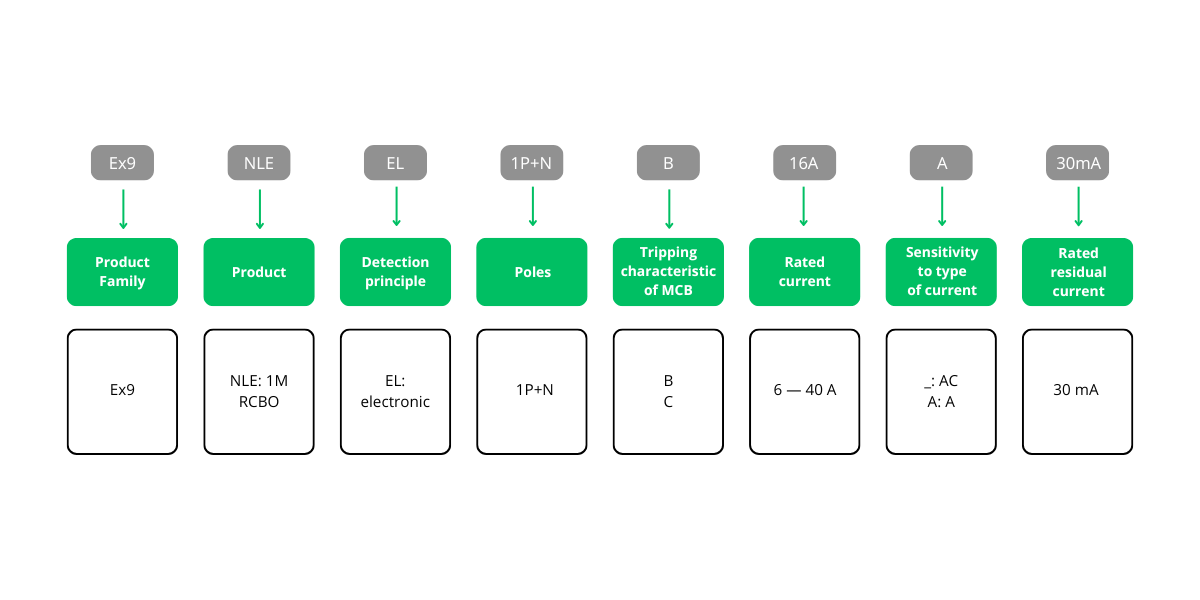
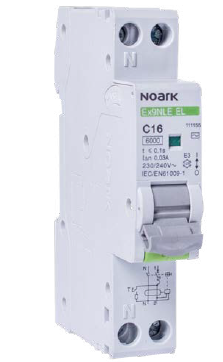
RCBOs Ex9NLE, 6 kA
- Interruttori Magnetotermici
- Differenziali a un modulo con protezione da sovraccarico secondo la EN 61009-1
- Potere di interruzione nominale Icn 6 kA
- Versione 1P+N poli
- Corrente differenziale nominale 30 mA
- Corrente nominale fino a 40 A
- Caratteristiche di intervento B e C dell’interruttore automatico integrato
- RCBO di tipo AC e A
- Larghezza 1 modulo (18 mm)
- Adatto per applicazioni da -35 a +70 °C
Gli interruttori differenziali con protezione da sovraccarico Ex9NLE, dipendenti dalla tensione, occupano solo un modulo, consentendo così di risparmiare spazio all’interno del quadro rispetto ai tradizionali RCBO. Si basano su un principio di valutazione elettronica, che garantisce una misurazione più precisa della corrente differenziale. Inoltre, questi dispositivi non risentono della magnetizzazione dell’unità di sgancio.
Gli interruttori differenziali (RCBO) devono essere testati regolarmente; i tempi di verifica possono essere soggetti a leggi o regolamenti locali. Si raccomanda di eseguire il test ogni 6 mesi in ambienti normali e ogni mese in condizioni gravose. La prova di isolamento deve essere eseguita sui terminali superiori, con il dispositivo in posizione OFF.
Certificazioni
RCBOs Ex9NLE, 6 kA
- Interruttori Magnetotermici
- Differenziali a un modulo con protezione da sovraccarico secondo la EN 61009-1
- Potere di interruzione nominale Icn 6 kA
- Versione 1P+N poli
- Corrente differenziale nominale 30 mA
- Corrente nominale fino a 40 A
- Caratteristiche di intervento B e C dell’interruttore automatico integrato
- RCBO di tipo AC e A
- Larghezza 1 modulo (18 mm)
- Adatto per applicazioni da -35 a +70 °C
Gli interruttori differenziali con protezione da sovraccarico Ex9NLE, dipendenti dalla tensione, occupano solo un modulo, consentendo così di risparmiare spazio all’interno del quadro rispetto ai tradizionali RCBO. Si basano su un principio di valutazione elettronica, che garantisce una misurazione più precisa della corrente differenziale. Inoltre, questi dispositivi non risentono della magnetizzazione dell’unità di sgancio.
Gli interruttori differenziali (RCBO) devono essere testati regolarmente; i tempi di verifica possono essere soggetti a leggi o regolamenti locali. Si raccomanda di eseguire il test ogni 6 mesi in ambienti normali e ogni mese in condizioni gravose. La prova di isolamento deve essere eseguita sui terminali superiori, con il dispositivo in posizione OFF.
Clicca per aprire lo schema