
N energy Solution
Protecting an electrical panel from overvoltages is not just about placing a surge protector inside the enclosure. It requires analyzing the actual risk of the system and coordinating the protection devices so they are fully effective when needed.
Surge voltages, whether caused by direct lightning strikes, indirect strikes, or switching operations on the distribution grid, are one of the leading causes of damage to PLCs, inverters, and electronic components, resulting in costly system downtime. To prevent these scenarios, knowing how to choose the correct Surge Protective Device (SPD) is essential.
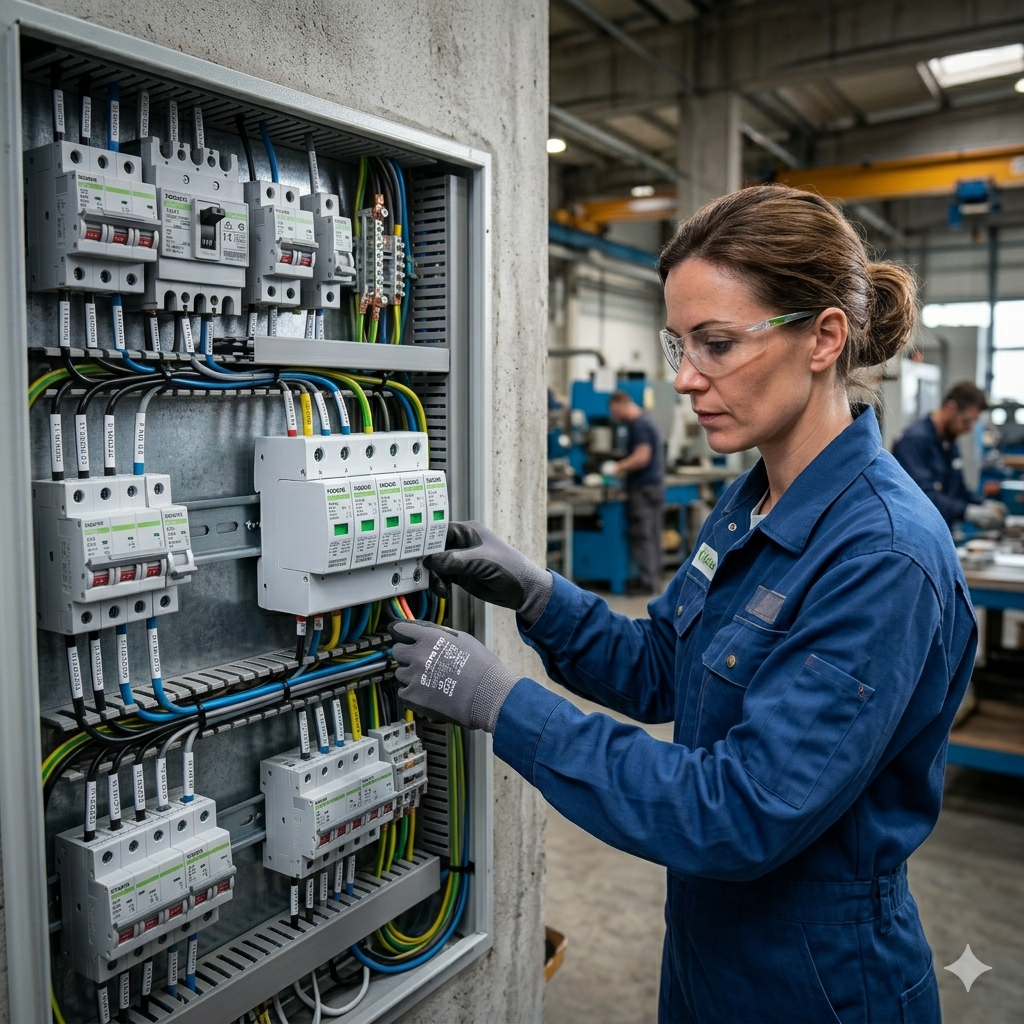
Type 1 SPD (Class I): Protection Against Direct Lightning Strikes
Type 1 surge protectors are designed to divert the high energy associated with direct lightning strikes. These devices are tested with a typical 10/350 μs current waveform, which simulates the high-energy impact of a lightning strike on the structure or the overhead power supply line..
Where they are installed:
When they are mandatory:
Technical features:
Type 2 SPD (Class II): Protection for Sensitive Equipment
Where they are installed:
They are installed in secondary distribution panels or in the main panel if the risk of a direct lightning strike is ruled out by protection calculations.
Technical features:
Compared to Type 1, they have a lower discharge capacity, but they offer a much lower and more precise voltage protection level (Up). These devices are critical for safeguarding the integrity of electronic boards, inverters, and power supplies.
Combined SPDs (Type 1+2): The Smart Choice for Industrial Applications
In the tight spaces of modern industrial or automation electrical panels, installing and coordinating two separate surge protectors can be complex and space-consuming. For this reason, a combined Type 1+2 SPD is often the ideal choice.
This device combines the performance of both categories into a single module, providing the ruggedness needed to handle lightning currents alongside the precision required to protect terminal loads.
Space saving:
It reduces the number of modules occupied on the DIN rail inside the panel.
Simplified wiring:
It eliminates the need to calculate and install coordination distances or decoupling coils between two separate surge protectors.
Noark Range:
Noark combined SPD solutions offer reliable plug-and-play protection, complete with plug-in cartridges and visual status indicators to simplify predictive maintenance.
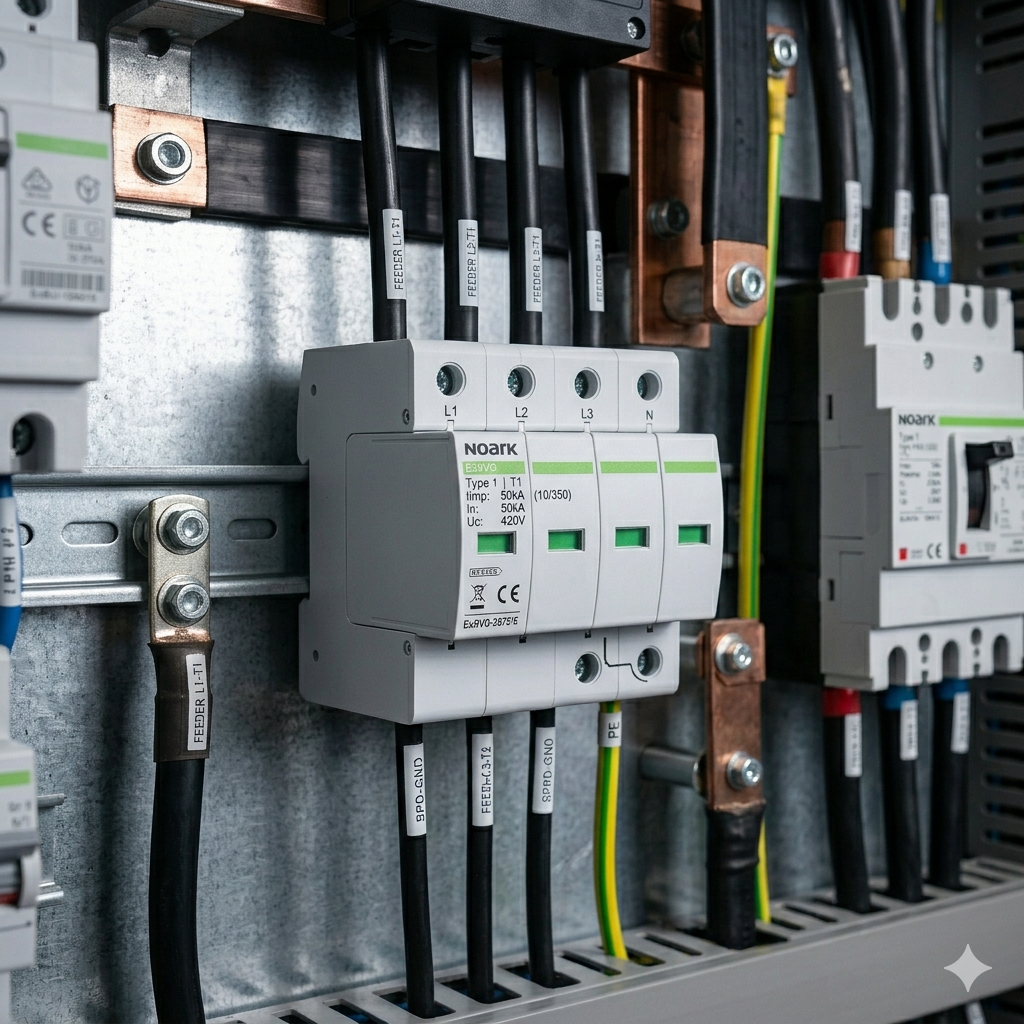
The 50 cm Rule: How to Avoid Wiring Mistakes
A frequent mistake made during the wiring phase can compromise the effectiveness of even the best surge protector on the market. The 50 cm rule states that the total length of the connection cable from the power line to the SPD plus the cable from the SPD to the main earth bar must not exceed 50 centimeters.
Under the effect of a high-frequency impulsive current (such as a lightning strike), every meter of cable generates a parasitic inductance that results in an additional voltage drop of approximately 1 kV per meter. If the connections are too long, the total voltage applied to the components will exceed their withstand threshold, destroying the electronic devices despite the presence of the SPD.
Technical Support for System Protection
Correctly selecting and coordinating surge protective devices is a key step to ensure service continuity in industrial plants and prevent expensive breakdowns.
To analyze the specifications of your next project, calculate the correct sizes, or explore the full range of Noark SPDs, contact the technical team at N Energy Solution for dedicated consulting and component selection support.

Contacts
For more information or to request a quote, please fill out the form
Address
Via Francesco Ferrucci, 203/c 59100 Prato (PO) Italy